Muslim-Indigenous Connection — Rooted in Islamic Faith; Inspired by Indigenous Wisdom

Rooted in Islamic Faith  ·  Inspired by Indigenous Wisdom

Muslim youth-led reconciliation in action

Muslim-Indigenous Connection (MIC) is a historic, path-breaking, and transformative intercultural leadership program for Canadian Muslim youth, grounded in Islamic teachings, inspired by Indigenous ways of knowing, and thriving on shared values that complement each other.

Join as a MIC 2026 Fellow Apply as a volunteer MICAN alumni network Watch the story
HISTORIC the first-ever youth movement focused on Indigenous reconciliation PATH-BREAKING grounded in a faith-inspired, Muslim-led reconciliation framework TRANSFORMATIVE creating impact that lasts for seven generations HISTORIC the first-ever youth movement focused on Indigenous reconciliation PATH-BREAKING grounded in a faith-inspired, Muslim-led reconciliation framework TRANSFORMATIVE creating impact that lasts for seven generations

Who We Are · Origin

Born from a call heard in every mosque in Canada

Summer 2021

The discovery of unmarked graves at former residential school sites in Kamloops sends shockwaves through Canadian faith communities.

July 9, 2021

75 Canadian imams sign a public solidarity statement with Indigenous peoples, read at Friday prayer congregations across the country.

Beyond words

Imam Irshad Osman (Naleemi) of the Danforth Islamic Centre in Toronto takes the call further: a youth program moving beyond statements into authentic relationship, pairing Muslim youth with Indigenous educators, Elders, and communities for sustained, structured dialogue.

MIC is born

First developed as part of the fellow project of KAICIID International Fellowship Program, the visionary proposal by Imam Osman becomes Muslim-Indigenous Connection (MIC). Runs for two years as a grassroot initiative and now has nestled under the wings of Canadian Muslims in Reconciliation (CMIR).

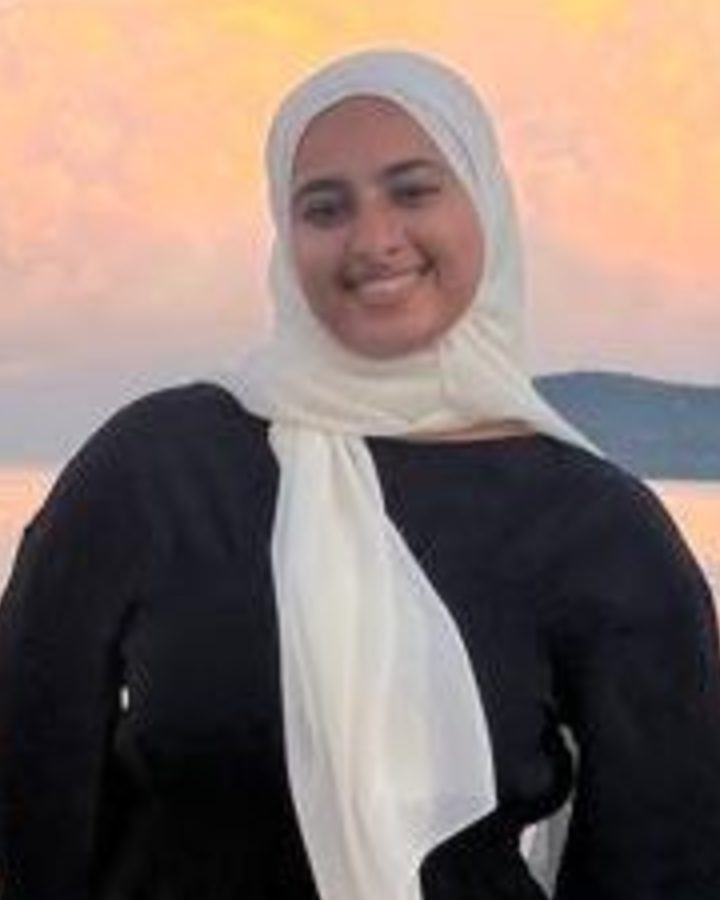
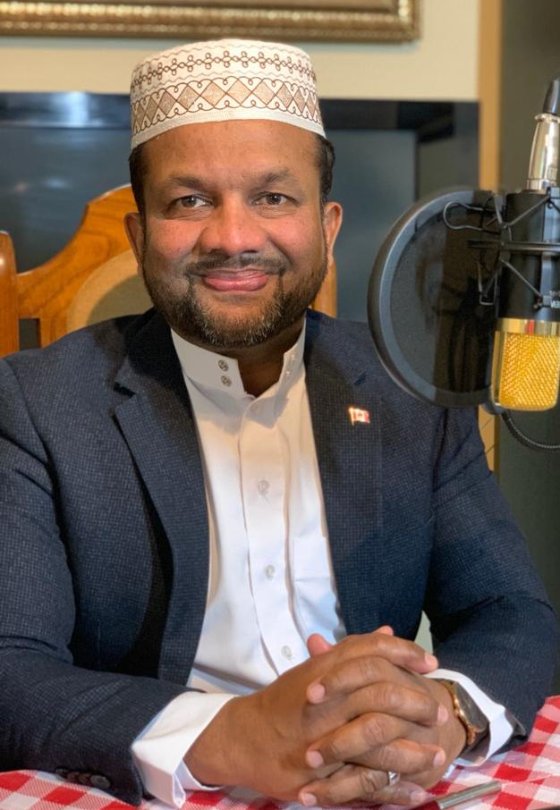
Imam Irshad Osman

“We realized the best way to bring this call to action to life is developing grassroots-level awareness of Indigenous communities’ beliefs, values, worldviews, legal orders, and struggles through inter-cultural dialogue.”

Imam Irshad Osman

Founder, MIC & CMIR

MIC exists to build authentic, lasting relationships between Muslim and Indigenous communities in Canada, rooted in justice, goodwill, and mutual understanding, not symbolic gestures.

As the only structured, youth-focused, faith-based Muslim-Indigenous reconciliation program in the world, MIC gives Muslim youth a faith-grounded reason, in addition to a civic one, to understand and act on reconciliation, while giving Indigenous partners a genuine, sustained relationship with a community that has historically had little structured contact with Indigenous nations in Canada.

The Muslim-Indigenous Intercultural Framework

Two knowledge systems, side by side

MIC pairs Islamic ethical teaching with Indigenous knowledge systems rather than treating reconciliation as a purely secular exercise. Sessions draw explicit parallels, following the example of the Prophet Muhammad’s acknowledgment of Medina’s original inhabitants.

Seven Generations

accountability to those yet to come

Amanah

trust: the earth held in stewardship

Seven Grandfather Teachings

wisdom, love, respect, bravery, honesty, humility, truth

ʿAdl

justice as a sacred obligation

The Medicine Wheel

balance of body, mind, heart, spirit

Karamah

the God-given dignity of every person

Truth before reconciliation

facing colonial history honestly

Tawbah

repentance: the return to right relationship

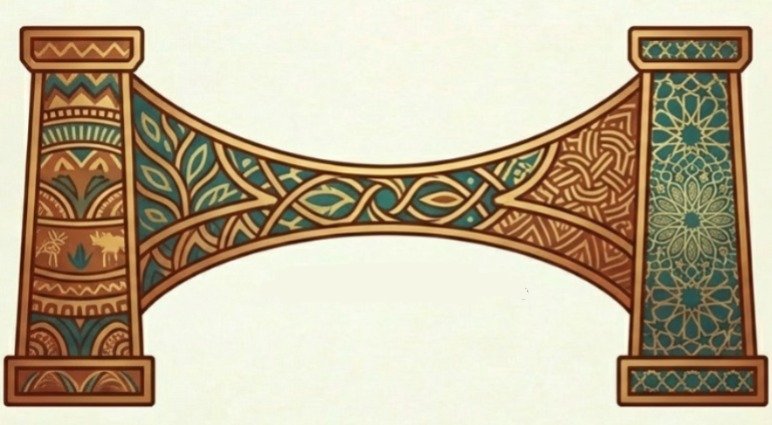
Illustrated bridge joining Indigenous and Islamic ornament

Where two traditions meet

What We Do · The Journey

One cohort. One season. A lifetime of relationship.

Each MIC cohort of 25 to 30 Muslim youth from a competitive applicant pool engage in this experiential and transformative journey from October to December, mixing virtual and in-person sessions led by Imams, Indigenous Elders, and Indigenous Knowledge keepers.

01

Orientation and Launch

MIC kicks off on Sept 30 (National Day for Truth and Reconciliation, i.e., Orange Shirt Day), introducing the program components, coordinators, and the graduation requirements.

02

Grounding Sessions

Islamic perspectives on Indigenous relations, importance of inter-cultural dialogue, and theological mandate to honor the hosts of the land.

03

Worldview Sessions

Indigenous ways of being and knowing, Indigenous values that are sacred, principles that are sustained, and struggles that are inter-generational.

04

Panel Discussion

A joint panel connecting Indigenous and Muslim voices around shared issues that affect both communities in the Turtle Island.

05

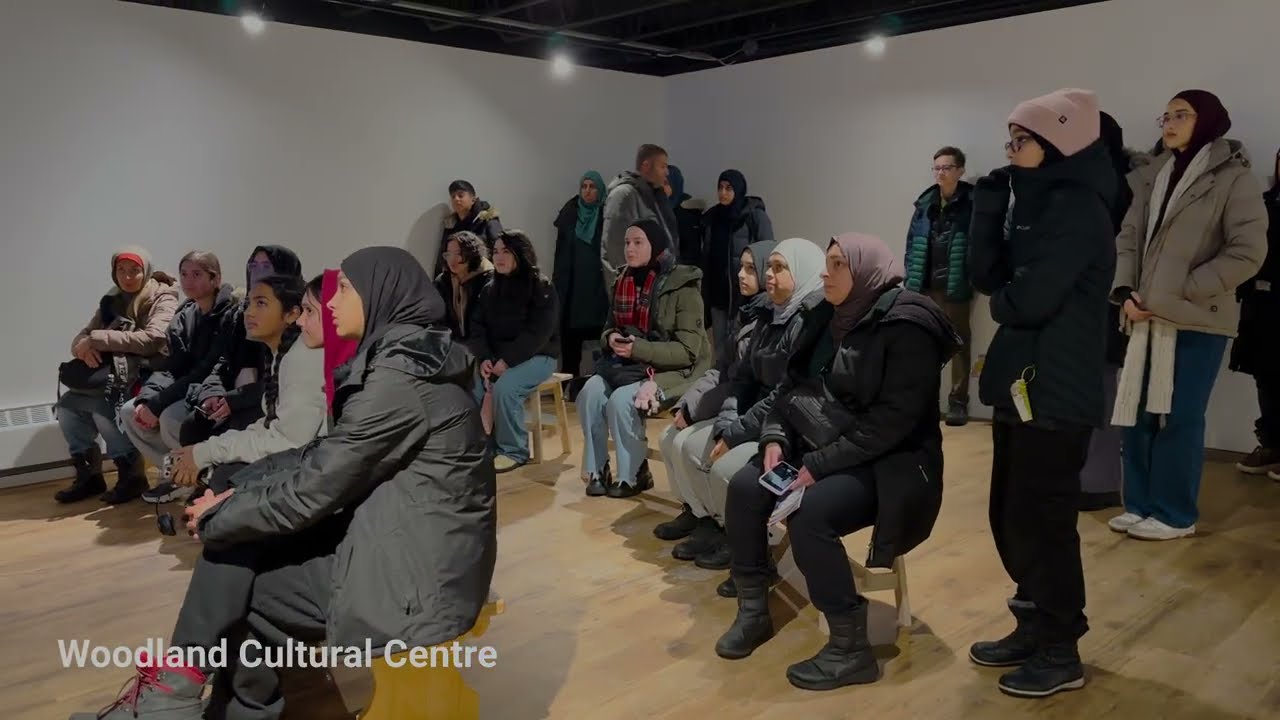
Full-Day Site Visit

An in-person visit to a former residential school and surrounding Indigenous community sites, guided by an Indigenous facilitator to enact place-based learning.

06

Youth-Led Micro-Projects

Small groups design their own action project in collaboration with an Indigenous partner organization to create social impact by applying the knowledge learned in the program.

07

Mentorship

Ongoing guidance from program coordinators and, increasingly, MIC alumni.

08

Graduation Ceremony

A celebration with speeches, certificates, and community recognition.

09

Pledge of Allyship

The graduates commit to challenging the colonial legacy of injustice and working toward Islah (healing) and Sulh (reconciliation) as an act of worship.

Apply for the MIC 2026 cohort →
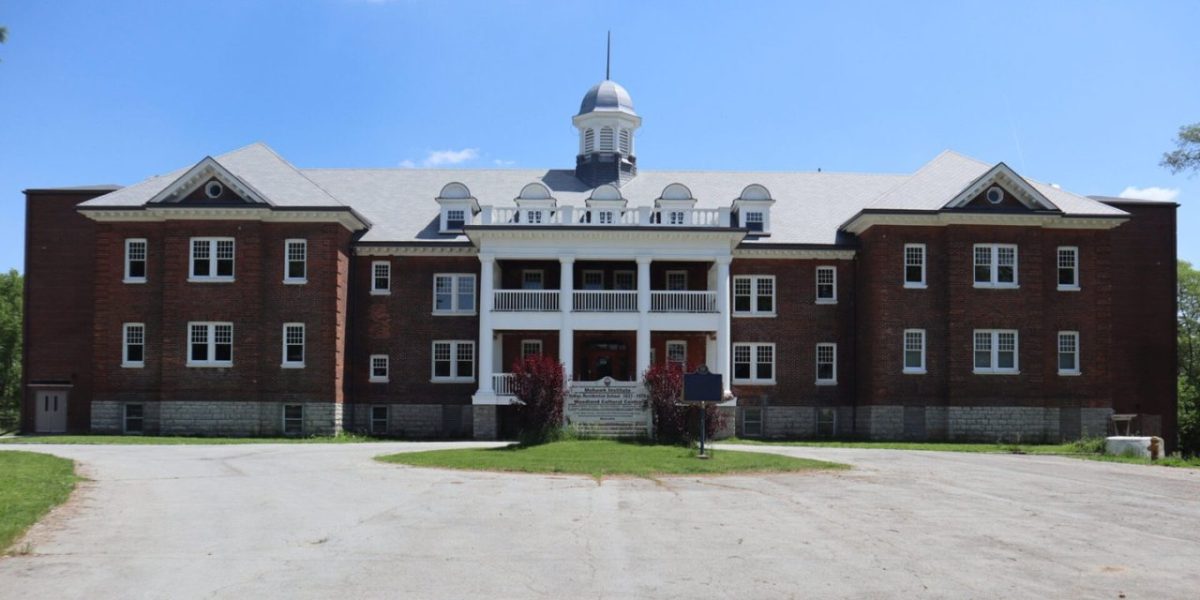
The Mohawk Institute Residential School building, now the Woodland Cultural Centre in Brantford, Ontario

Signature Experience · Brantford, Ontario

“The most transformative part of the program.”

MIC’s signature site visit takes youth to the Woodland Cultural Centre, a former Residential School, the historical Mohawk chapel, a Longhouse, a local Indigenous art shop, Gihekdagye Friendship Centre and the Brantford Islamic Centre, guided by an Indigenous Elder or a Knowledge Keeper.

Watch · MIC in Action

MIC film thumbnail

Trouble playing? Open it on YouTube →

Youth-Led Work · Micro Projects

What the youth built

Reconciliation projects designed and delivered by MIC fellows, in collaboration with Indigenous partner organizations. Page through each group’s presentation below.

Micro-Project

By : Blue Group

Group Members

Laila · Leader

Sumayyah · TikTok Account Manager

Hafsa · Content Creator

Zain · Content Writer

What Is MMIW

Missing and Murdered Indigenous Women (MMIW) refers to the crisis in Canada, the United States, and beyond in which Indigenous women and girls experience high rates of disappearance and violent deaths compared to other populations. This is both a human rights and public safety issue rooted in long-standing systemic neglect.

Our Goal

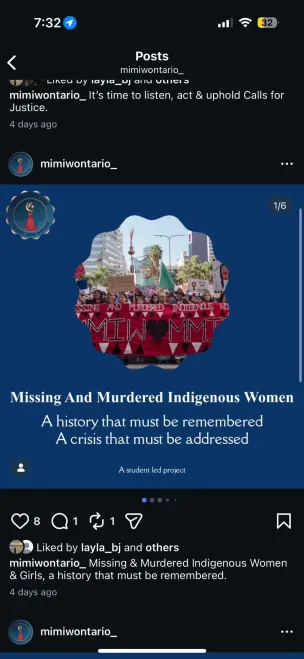
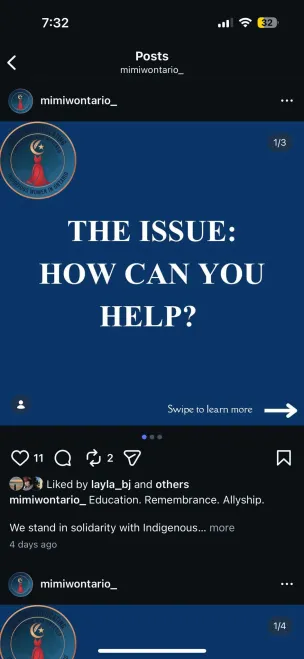
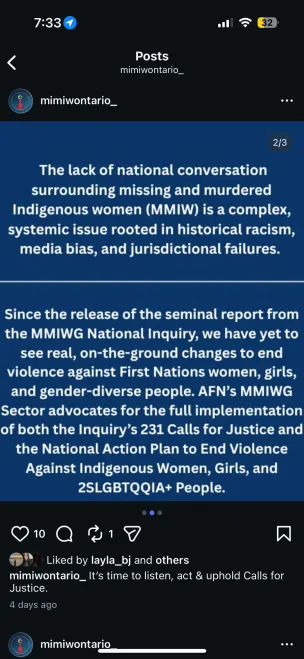
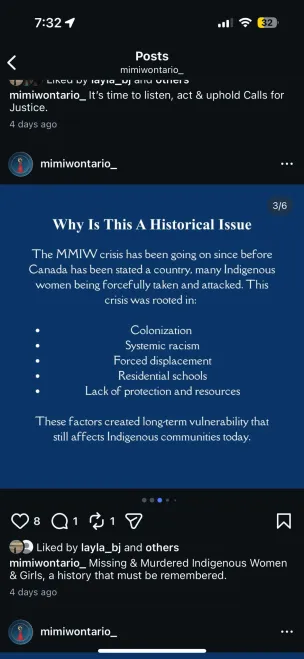
Our goal is to spread awareness about MMIW and discrimination towards Indigenous people by creating a social media account that has bold posts about current issues and well-researched facts to educate, inform and inspire action.

On Our Page

Campaign post: Missing And Murdered Indigenous Women Campaign post: The issue, how can you help? Campaign post about the 231 Calls for Justice Campaign post from the account

Impact

Our project will make a meaningful impact by using social media as a powerful tool to educate and engage people about the ongoing issue of Missing and Murdered Indigenous Women (MMIW) and the discrimination faced by Indigenous people. Through bold posts and accurate facts, the project will raise awareness in an accessible and powerful way. Ultimately, this project aims to inspire viewers to speak up and take action in support of justice and equity for Indigenous communities.

Why was this campaign effective?

Our Muslim-led social media campaign raising awareness about Missing and Murdered Indigenous Women was and continues to be effective because it uses digital platforms to amplify marginalized voices while fostering cross-community solidarity. Through consistent and informative Instagram posts, the campaign reaches a wide and diverse audience, especially youth, in an accessible and engaging way.

Standing in allyship

By educating followers, sharing Indigenous perspectives, and encouraging reflection and action, the campaign challenges silence, builds awareness, and promotes accountability. It also demonstrates how Muslim communities can actively stand in allyship, using their platforms to support justice, remembrance, and meaningful social change.
Thank You

Slide {{ blueSlide }} of 9

Blue Group · 2025 Cohort

Spreading awareness of MMIW and discrimination towards Indigenous people

A Muslim-led social media campaign built to educate, inform, and inspire action on the crisis of Missing and Murdered Indigenous Women.

Missing and Murdered Indigenous Women (MMIW) names the crisis in which Indigenous women and girls face far higher rates of disappearance and violent death, rooted in long-standing systemic neglect.

The group built and ran a social account of bold posts and well-researched facts, reaching a wide, largely youth audience.

Roles across the group: leader, account manager, content creator, and content writer.

The campaign amplifies marginalized voices while fostering cross-community solidarity, showing how Muslim communities can stand in active allyship for justice and remembrance.

Interconnectivity between Islamic, Christian / Catholic, and Native American / Indigenous spirituality

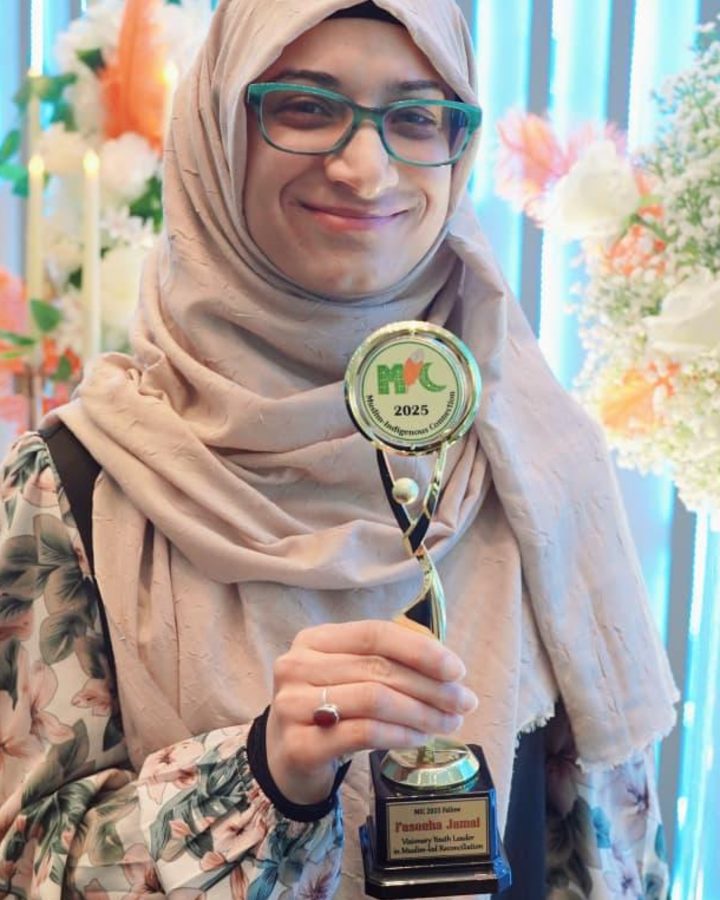
MIC Microproject presentation by Group Yellow, with thanks to Imam Irshad Osman, all the speakers, the people who brought us together, and our group members: Layla Jafferali, Zohra Jafri and Faseeha Jamaal.

Some excerpts

Details found in our comprehensive compilation

One Creator. Love is central. The Golden Rule.

Approach every faith critically, until you arrive at the faith of your choice.

A higher percentage of Indigenous people in Canada consider themselves Christian.

Knowledge accompanied with wisdom and humbleness is empowering.

The depth of Arabic words and of Indigenous languages, compared with English.

Native American and Islamic connections: the advent of the peace pipe, the origins of the medicine wheel, Arabs and Iranians.

Shared practice and principle

The Seven Grandfather Teachings align with both Islamic and Christian / Catholic principles.

Smudging, dry cleansing in Islam, and burning incense in the Catholic faith.

Mindfulness in spiritual practices.

Symbolism: values and healing practices.

Hope for, and expectation from, non-Indigenous people.

Embrace your unique gift instead of chasing another’s.

Honouring the land and nature.

Faith cannot be limited to institutions.

Caroline Sharp, Indigenous author of the podcast ‘The Space Between Stories’.

What we carry forward

Multiple paths to Creator.

Take the time out for yourself to get to know the truth before reacting to what is fed to you by social media or society.

Mainstream medicine and Indigenous medicine.

Connection with Indigenous communities is relational, not transactional.

Lifestyle and beliefs greatly impact one’s healing process.

Indigenous traditional medicine is not a pill in a bottle.

Slide {{ yellowSlide }} of 4

Yellow Group · 2025 Cohort

Interconnectivity between Islamic, Christian, and Indigenous spirituality

A comparative study tracing shared ground across three spiritual traditions, presented by Layla Jafferali, Zohra Jafri, and Faseeha Jamaal.

Common threads: one Creator, love as central, and the Golden Rule in all three traditions.

The Seven Grandfather Teachings align with both Islamic and Christian principles; smudging finds echoes in dry cleansing in Islam and burning incense in Catholic practice.

On healing: mainstream and Indigenous medicine, and the reminder that Indigenous traditional medicine is not a pill in a bottle.

Connection with Indigenous communities is relational, not transactional. Faith cannot be limited to institutions.

Our Impact · Measured Outcomes

Growth you can measure, change you can feel

Youth in the 2025 cohort completed pre- and post-program self-assessments. Understanding and engagement rose across every measure tracked.

Understanding reconciliation from an Islamic paradigm

3.36 → 4.25

Ability to name three Indigenous nations or communities

3.45 → 4.67

Openness to challenging one’s own assumptions and biases

4.18 → 4.75

Understanding of the Truth & Reconciliation concept

4.09 → 4.58

3

cohorts since 2021

25–30

youth per cohort

4.25/5

avg. 2025 program rating

150

youth by 2029, at up to 50 a year

MIC

Global Recognition · Commonwealth Secretariat, Nov 2025

MIC was selected as a successful youth intercultural engagement model at the 5th Global Youth Work Conference in Malaysia (Nov 2025). The program provides a scalable framework for global Muslim communities to build authentic relationships with Indigenous peoples in their respective regions such as the Orang Asli in Malaysia, Adi Vasis in India, Aboriginal peoples in Australia, Veddhas in Sri Lanka, Mayans in Mexico, etc

Voices of the Journey

Reconciliation is not something we inherit, but something we build, step by step, relationship by relationship. Our future as Muslims in Canada is inseparable from our relationship with Indigenous peoples.

Muneeb Nasir

Interfaith advocate · MIC 2025 Graduation

MIC is Muslim-led reconciliation in action. The seed has been planted. The plant is growing. But it needs a forest.

Imam Irshad Osman

Founder, MIC & CMIR

Visiting the residential school and seeing with my own eyes the suffering and the love made me more aware and curious than the school lessons I attended or videos I watched before.

MIC Student

2025 Cohort

To me reconciliation means to work towards honoring those who have been impacted by this genocide, by making reparations, by awareness, acknowledgement, and dismantling of systemic barriers against Indigenous peoples.

MIC Student

2025 Cohort

I view the knowledge that I have about Indigenous nations as a responsibility, and I try to raise the awareness of family, friends, and schoolmates about issues faced by Indigenous communities, such as the MMIWG crisis.

MIC Student

2025 Cohort

Join the Journey · Get Involved

Every movement needs a diverse team

For the Muslim Community

Spread the word

Mosques, Islamic schools, and community organizations can help spread the word, host information sessions, or refer youth. MIC also shares Indigenous-education resources (readings, terminology guides, and short videos) for community members to use on their own.

For Volunteers

Find your place

Organizer, storyteller, grant writer, or connector: MIC runs on a volunteer team covering facilitation, curriculum, mentorship, logistics, outreach, social media, and grants. Typically 2–3 hours a week, about 5 during the fall cohort season.

Apply as a volunteer →

For Alumni · MICAN

Keep growing

Graduates join MICAN, the MIC Alumni Network launched in 2026: conferences and fellowships, mentorship both ways, community gatherings, leadership roles within MIC, and small grants to extend or launch new youth-led projects.

Join the network →

Contact

Start a conversation

Muslim-Indigenous Connection (MIC) is a program of Canadian Muslims in Reconciliation (CMIR), based in Toronto, Ontario.

General inquiries mic2025@cmir.ca Board / partnerships board@cmir.ca
Follow MIC

Support the Mission

You are witnessing something truly unique and historical in the Canadian landscape

MIC is Muslim-led reconciliation in action by the next generation of Muslim youth. This award-winning Canadian youth leadership program has a proven track record of measurable prejudice reduction and sustained civic engagement, and it generates a remarkable social return on investment.

Your gift today directly inspires and encourages young Muslim leaders to follow the prophetic tradition of honoring the hosts of the land and being witnesses to justice.

One-time gift

Any amount Tax receipt

You choose the amount on the form. A single gift covers the real costs of a season: trainers, Elders, transport, and the youth micro-grants. Zeffy is fee-free, so 100 percent of what you give reaches the program.

Give once

Recurring support

Monthly Quarterly Yearly

Set your own amount on any schedule. Recurring giving is what lets MIC plan a full cohort with confidence, year over year.

Give recurring

Other ways to give

E-transfer board@cmir.ca
By phone 647-338-6089
Program office mic2025@cmir.ca

Credit card and online gifts are processed securely through Zeffy, with no platform fee deducted from your donation.

Direct your gift

You can allocate your gift to the part of the program that matters most to you.

Weekly training sessions

Honorarium for Indigenous Elders

Honorarium for Muslim trainers

Honorarium for volunteers

Food, refreshments, and prizes for youth

Full-day site visit to Indigenous landmarks

Micro grants for youth projects

Marketing and communication

Graduation celebration

Where the need is high

With the support of

KAICIID International Dialogue Centre
Interfaith America
Euphrates Institute
Human Concern International
Muslim Circle of Canada
Danforth Islamic Centre
One Love Family Services
Peace Practice Alliance
SFHEW.org
Partner organization
Muslim Women’s Philanthropy Circle